Global Analysis from the European Perspective. Preparing for the world of tomorrow


How things are sold and packaged to us

Traditional economics assumes that people make decisions rationally and after careful consideration. In practice, however, Homo sapiens rarely resembles Homo economicus. We are not machines that coldly calculate profits and losses. We are beings who, despite millions of years of evolution, make decisions under the influence of emotions and unconscious impulses. Behavioural economists and experts in neuromarketing are aware of this and use it to sell us products and services.

Daniel Kahneman, who was awarded the Nobel Prize in Economics in 2002, demonstrated together with Amos Tversky that people make decisions based on emotions and heuristics (mental shortcuts). These simplified rules of thought enable quick decisions, but ones that are usually inaccurate.

The first of these cognitive mechanisms is the anchor effect. This means that the first piece of information we are given – such as the price – becomes our benchmark. For example, if a shop reduces the price from 500 to 300, customers see this offer as a great opportunity, regardless of the product’s actual value.

The second cognitive mechanism is the availability heuristic (mere-exposure effect): we consider things to be more important or more likely if an example immediately springs to mind. Insurance companies exploit this by showing specific claims in their adverts, leading us to buy policies we may not even need.

The third is the certainty effect: people prefer a small but guaranteed profit to the chance of a large profit. A “free gift with every order” is often more appealing than competition.

The fourth is loss aversion: adverts such as “Offer ends in 2 hours” or “Only 24 left in stock” attract customers like a magnet. Loss aversion is also linked to the FOMO effect (fear of missing out). This causes market participants to make irrational decisions under the influence of social pressure and the fear of missing out on an opportunity (see, for example, recent buyers of precious metals on the stock market).

The fifth is cognitive ease: used in marketing through consistent branding and slogans. If a message is repeated often enough, it ‘slips’ into the brain without resistance. This builds trust, even when there are no factual arguments to back it up. This is combined with clear presentation (visual ease) and ease of content (simple language, humour).

The sixth is the effect of scarcity. When a well-known brand announces a limited-edition product, people often react with enthusiasm. They see it as something exclusive and rare that will enhance their status and self-esteem. Nobody asks whether the product is worth the price.

The seventh is framing – the construction of an appropriate narrative.

The eighth is the halo effect. We are more likely to believe attractive, well-dressed people than those who look average, unattractive or poor, even if this says nothing about their competence.

Modern neuromarketing has long since incorporated all these effects and is taking things further by utilising the latest discoveries in neurobiology, cognitive science, psychology, data science and artificial intelligence. It examines not only human behaviour, but also its biological basis.

Politicians make massive use of neuromarketing, and we fall for it. They simply talk (Trump’s cognitive ease). They show us gruesome images of destroyed Ukrainian cities and say: ‘The war may soon come to you if you don’t pay more tax for defence spending. You must buy and produce weapons immediately, otherwise it will be too late’ (FOMO).

Politicians want to keep pay rises in the public sector as low as possible, so they stir up the trade unions, who then demand a far-fetched 15% increase (the anchor). Both sides then agree on 5%, and the electorate (the customers) are happy (the certainty effect).

Politicians never talk about necessary tax increases, but rather about ‘investing in the future.’ Instead of talking about ‘restrictions on freedoms,’ they talk about ‘security measures.’ Statistics: Voters are more likely to support a programme that promises ‘95% employment’ than one that talks about ‘5% unemployment,’ even though mathematically it is the same thing. Both are examples of framing.

Olaf Scholz positioned himself as Angela Merkel’s successor (even copying her diamond-shaped hand gesture). He capitalised on the fact that voters’ brains favour what is familiar (the mere-exposure effect). For Germans, voting for Scholz was ‘cognitively easy’ – not a revolution, but stability that provided a sense of security.

Youthfulness, impeccable looks and energy created a strong halo effect for Macron and Trudeau. Voters unconsciously attributed economic and political competence to them (which, as newcomers, they could not prove) because they reacted positively to their overall presence and self-assured demeanour.

Brussels constantly relies on certainty and availability heuristics. Half-truths – such as the claim that the EU is beneficial for all member states – or outright lies – such as the assertion that we need ‘doctors’ from Somalia or ‘engineers’ from Rwanda – are repeated so often that, for some Europeans, these lies begin to feel like facts. It is claimed that leaving the EU is not worth it, as EU funding is so beneficial. Hardly anyone mentions that leaving could eradicate the demographically and economically devastating (green; LGBTQ) ideology. Hardly anyone mentions that leaving could enable Eastern and Central European countries to prevent the migration of their best skilled workers to Western Europe.

Just as in Brussels, the authorities in Beijing blow like the wind over the people, and the people (like grass) bend, as the sage Confucius once said. They operate a system of electronic surveillance involving thousands of cameras and facial recognition, and present it as concern for the citizen (framing). Citizens bend like grass under the pressure of the wind and are content that they are in the green in the state’s points system, allowing them to travel and enjoy small freedoms. The certainty effect.

One could go on listing examples for a long time. The main thing is that we understand the mechanisms and do not fall for them.


 

EU swooped down on Hungary

The last (relatively) sovereign state within the European Union has been eventually brought to toe the EU ideological line. Viktor Orban’s FIDESZ party has suffered a landslide defeat in Hungary. Viktor Orban, the incumbent prime minister, a man who would have visited Washington and Moscow within the same month, the man whom the European Union establishment hated viscerally (also referring to him as a dictator!) for sixteen long years has been toppled. The TISZA opposition party and its leader Peter Magiar won 138 seats in a 199-seat Hungarian parliament, which enables them to single-handedly change the constitution. The Brussels bureaucrats are gloating. How did it come about?

Democracy is the expression of the will of the people, as we know, but the will of the people is malleable. Long exposure to the intense anti-Orban propaganda that had been carried out for several years has had its effect. Add to this a couple of errors perpetrated by the Orban government, and you have the whole picture. What were the government’s errors? Corruption, the close liaison between the Hungarian authorities and President Donald Trump, who turned out to become a war-monger, the fact that Budapest backed up Israel in the latter’s conflict with Iran… Also, the European Union’s sanctions imposed on Hungary as punishment for Viktor Orban’s independence and the simple factor of Hungarians growing tired of having the same leader for so many years.

The overall result? The overall result will be that the European Union will be more monolithic than before. Viktor Orban was a beacon of independence and resistance to Brussels’ dictate. Sadly, the European Union’s steamroller has walked over the land of Magyars. Pity.

Pity because unanimity is a straight path to self-annihilation. Pity because unanimity petrifies and fossilises ideology – any ideology – and a petrified and fossilised ideology is suicidal even if it is an otherwise good ideology. Ever. Democracies pride themselves on having a system of checks and balances. Hungary was – even if small – such a check. Thanks to the veto right, this small country could effectively block some of the (more irrational) European Union initiatives. Now, all the European Union party-members will clap their leaders and execute their leaders’ orders. A divergent voice is what prevents a group or a system from going totally astray. This divergent voice of reason will be lacking in the years to come. Pity. 

What is the basis of green ideology?

On our fear, of course. Visions of the end of the world have always deeply unsettled people. Priests and rulers exploited this to control the masses. Perhaps only the fear of foreign enemies was sometimes greater – be it the Germanic tribes for the Romans, the Mongols for Eastern Europeans, or Putin for the West.

The Greens capitalise on our fear of the end of the world, which they claim is imminent because of our own fault. This fear is a form of self-blame and masochism.

One of the fathers of so-called climate change, which has caused us sleepless nights and turned our lives upside down, was Prof. James Hansen, who worked for NASA. On 23 June 1988, his speech to the US Senate marked the beginning of a new era. The myth that CO2 was the sole factor responsible for global warming began. Yet the fact that humanity’s enormous progress over the last 200 years would not have been possible without the burning of fossil fuels is often glossed over.

It was the baby-boomer generation that first fell into the trap of green ideology, as they were gripped by a fear of nuclear war instilled in them by the Cold War. They said ‘no’ to nuclear power and ‘no’ to fossil fuels. The baby-boomers equated nuclear power stations with nuclear weapons and shut down the former. Now even Hansen has recognised his errors in reasoning and, during a demonstration at the Brandenburg Gate, implored the Germans not to phase out nuclear power (03/11/21).

Just as disinformation about nuclear power was hammered into the minds of the baby boomers for decades, so younger generations are being led to believe that renewable energy sources are more sustainable. It is shocking how few people died as a result of the Chernobyl accident. It is shocking that no one died as a result of the Fukushima accident. But these were dramatic events that made it easy to instil fear.

It is shocking that the efficiency of offshore wind farms is 40% lower than theoretically assumed, which means it takes 14 years for the total costs to pay off. Furthermore, as the wind does not always blow, gas or coal-fired power stations must be on standby to feed electricity into the grid, meaning that, in practice, they operate continuously. If not, it ends up like it did in Spain in April 2025, where there were massive blackouts. Energy storage systems are said to be an alternative to gas-fired power stations, but in the case of a 1GW wind farm, they increase costs by €10 billion and extend the payback period to 29 years. Economic madness.

The same applies to solar power stations – they require 300 to 800 times more land than traditional ones. The same goes for electric cars: 24 kilograms of copper are needed to manufacture an electric motor. Friedrich Schmidt-Bleek, a professor of chemistry at the Wuppertal Institute for Climate Research, has calculated that 8 tonnes of natural resources (soil, water, oxygen, etc.) must be sacrificed for 24 kilos of copper. It’s madness!

The green transition is emptying Europeans’ pockets, and electricity prices are skyrocketing. The green transition is making us dependent on China; it is making us weak. It is destroying nature. Particularly in Africa, where cobalt (indispensable for electronics and electric cars) and other raw materials are mined in ways that devastate the environment.

The Green ideologues could have cited well-known philosophers and economists. They could have referred to Martin Heidegger, who warned against treating the world (including nature) solely as ‘stock’. They could have referred to Thomas Malthus, who became famous for the theory that population growth would outstrip food production, leading to catastrophe, and extended this theory to non-renewable energy sources. But they did not, because they rely on and draw their inspiration from terrorists who glue themselves to the tarmac in the middle of the city and from screaming girls like Greta who try to scare us. They rely on parasites who receive funding from the major corporations in the eco-industry for their “activities”.


Utilities for hard times

This short article is intended for long-term investors who allow themselves to be distracted by Trump’s speeches and wars and are tempted by the mainstream trend of investing in AI, IT and weapons.

The so-called ‘utilities’ sector is a defensive sector of the economy that provides everyday goods and services. People can tighten their belts when it comes to spending on electronics, holidays or cars, but they cannot do without electricity, water or gas. This makes demand for these companies’ services relatively stable regardless of the economic cycle. During a recession, they usually fall less than the broader market, although in times of euphoria they tend to grow more slowly than technology or industrial companies. For a long-term investor, this is not a disadvantage but an advantage. Such a sector can, in fact, act as a portfolio stabiliser.

The second key element is the regulatory model. A significant proportion of revenue for companies in the utilities sector comes from tariffs approved by regulatory authorities. Whilst this limits the potential for very dynamic growth, it offers predictability in return. Many of these companies operate as local monopolies and therefore do not have to compete for customers in the same way as companies operating in highly competitive markets.

On the other hand, there are regulatory risks, as decisions made by public officials can affect a company’s profitability.

The third argument in favour of such companies is dividends. Utility companies are among the sectors that traditionally offer shareholders an attractive share of their profits. A stable cash flow enables such companies to distribute profits regularly, and for an investor focused on passive income, this is of the utmost importance.

However, one must not overlook the weaknesses of this sector. The construction and maintenance of energy, gas or water supply infrastructure require enormous capital expenditure. As a result, utility companies generally have high levels of debt. High debt levels are not unusual in the modern world, but they make the sector sensitive to changes in interest rates. As interest rates rise, so do the costs of servicing debt. Consequently, investors tend to view shares in companies in this sector somewhat like bonds. When bond yields rise, some capital flows away from these companies, which can put pressure on their share prices. However, this should not be interpreted as a deterioration in the quality of their business, but merely a shift in investor preferences.

Why might utilities be set for an extra boost to growth right now? In recent years, the utilities sector has gained a new and very strong case for investment: the development of artificial intelligence. AI does not operate in a vacuum. Behind every model, every data centre and every AI-based service lies a vast computing infrastructure that requires huge amounts of electricity. This means that the next industrial revolution driven by AI could increase energy demand in the coming years and, above all, have a positive impact on electricity supply companies. That is why the sector, which has been viewed as dull and uninteresting over the last few years, could now be one of the biggest beneficiaries of a changing world. In 2026, many market segments are performing poorly, particularly following the very strong growth of previous years. Some of the more defensive sectors are currently performing relatively well despite the war narrative, which shows that capital is once again seeking stability and predictable cash flow.

Looking for specific investment tips? Here you go. Here are a few companies that pay dividends regularly and increase them (US market): NextEra Energy, Atmos Energy, Essential Utilities, Eversource Energy, and Consolidated Edison.


Thucydides’ Trap

In recent decades, the US strategy towards China has been based on economic opening towards the Middle Kingdom, which was particularly evident in the outsourcing of American manufacturing there. This was made possible by the reforms of Deng Xiaoping, who facilitated and advocated this opening. The subsequent leaders of the People’s Republic of China (Jiang Zemin, Hu Jintao) zealously fulfilled Deng’s legacy, although the current leader, Xi Jinping, has violated one of his predecessor’s most important teachings: the famous 24 character-mantra. Deng’s testament read as follows: Observe coolly and calmly, secure your positions. Gain trust, conceal your capabilities, bide your time without stepping out of line, do not raise your head if you wish to retain your leadership.

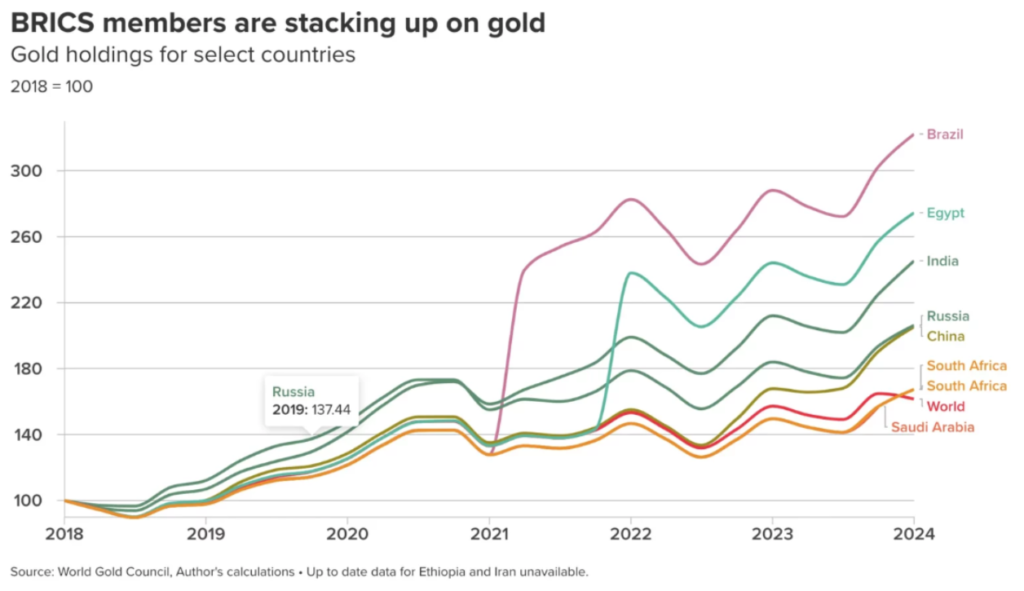
Xi broke ranks: he flooded the West with cheap goods of ever-improving quality, sold US Treasury bonds, hoarded gold, built artificial islands for his bases in foreign waters in the South China Sea, expanded his fleet, developed hypersonic missiles, landed on the moon, helped the Serbs, Iranians, Russians, won over half of Africa, and built the world’s longest bridges, dams and cities. A colossal emperor!

Meanwhile, the US empire survived only thanks to innovation and increased productivity. That is not enough. The Americans know this and, in response to China’s abandonment of Deng’s policies, have sent Emperor Trump to the front line. The guns are now thundering against Beijing’s allies; tariffs and sanctions are being imposed. But… if this continues, it could well end in a kinetic, direct conflict between the US and China.

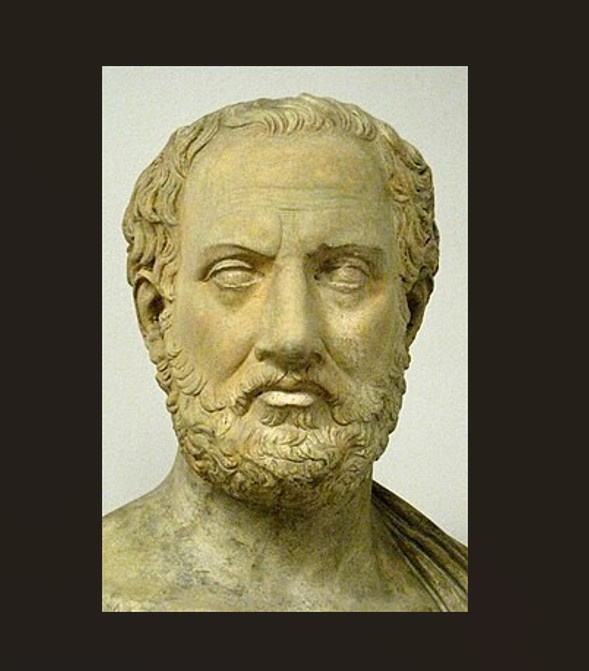
Many political scientists see parallels here with the so-called Thucydides Trap. The ancient Greek historian Thucydides wrote a famous work, The History of the Peloponnesian War, which describes the conflict between the two greatest city-states. The aforementioned “trap” suggests that ancient Sparta, seeing its position in Hellas under threat, sought an escalation with Athens, which claimed the role of hegemon. At that time, the Greek world was bipolar, which threatened to escalate. This occurred in 431 BC. According to Thucydides, this war was inevitable precisely because one of the city-states wanted to retain the status of hegemon and the other wanted to attain that status. However, the war ended with both the Spartans and the Athenians losing their influence.

The historian Graham T. Allison has expanded on the concept of Thucydides’ Trap and, in his study, described 16 examples of it, 12 of which ended in war, e.g.:

[1] Late 17th to mid-18th century – Kingdom of France vs. Kingdom of Great Britain – war

[2] Mid-19th century – France vs. German Empire – war

[3] Mid-20th century – United States vs. Empire of Japan – war

Allison’s concept has been criticised by many political scientists, such as Hal Brands and Michael Beckley. They argued that in many of the cases identified by Allison as the Thucydides Trap, it was not the impending overtaking of an old hegemonic power that triggered the war, but rather the rising power struck first when its rapid rise turned into stagnation.

At present, however, we are seeing that the Chinese economy may be stagnating in the face of the new oil crisis and tariffs.

Eternal Aesop

What is has always been, what is will always be. That’s what humanity noticed at the dawn of history. These observations have been collected and handed down from generation to generation, first, by word of mouth, then they were enshrined in holy scriptures of different peoples, of various faiths or simply in epic literature.

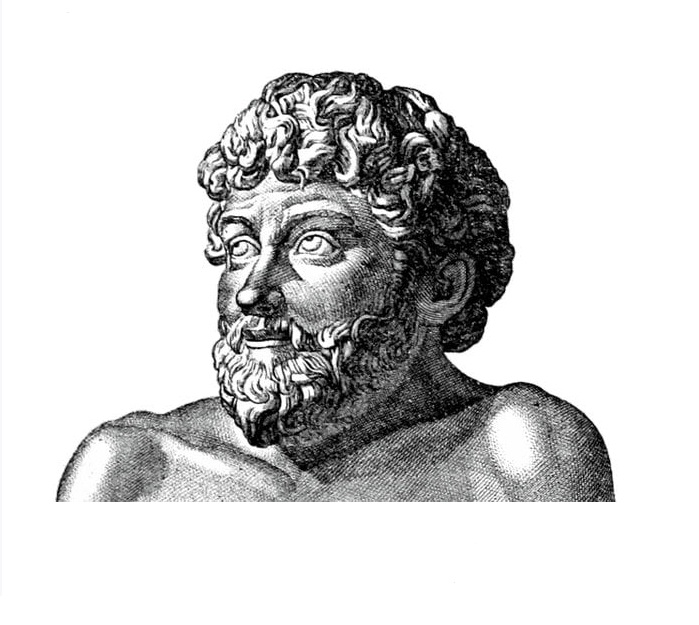
In ancient Greece it was Aesop, a storyteller or – most probably – a story collector, who encapsulated human knowledge in brief fables. Those fables refer not only to human character but also to the life of societies. They are a treasure trove of timeless wisdom.

Take the story about the lion and the farmer’s daughter. The lion fell in love with a farmer girl and wanted to marry her. His requests were turned down by the girl’s father again and again because the father was scared for his daughter if she were to be the lion’s wife. Simultaneously, he feared the lion. The farmer needed to turn down the lion’s requests in a diplomatic way. As the farmer was running out of excuses explaining why he withdrew his permission, he resorted to a trick. He demanded that the lion tear off all his claws because they were an obvious threat to his daughter’s safety if she were to become the lion’s wife. The king of animals complied. When he turned up to eventually receive permission from the girl’s father to marry her, the farmer – now fully confident that there was nothing he could fear once the lion had been defanged – said a final and resounding no. The lion could do nothing about it: he himself had deprived himself of his armament.

Now look for mirror reflections of this story in the history of the world, especially in current politics. The USSR desperately wanted to ingratiate itself with the West. The Soviet Union’s requests were met with demands, which Moscow was all too willing to comply with. Once the Soviet Union had disarmed itself – not merely militarily, but politically and economically – it became easy prey for the world’s powers that be.

China has understood the lesson and refused to follow the Soviet Union’s example. Beijing blazed its own trail out of communism to state capitalism, and it proved successful. Similarly, Iran was attentive at class and consequently has done its homework. The American and Israeli demands that Tehran disarm the country were declined, which eventually led to the war that we are witnessing at present.

Or the fable about the swallow, the flax, and the other birds. The swallow saw people sowing flax. The swallow was knowledgeable about what flax was used for. The swallow gathered the other birds and told them that people had sown flax in order to make cords for traps and nets with which to catch birds. The swallow strongly advised the birds to fly to the newly sown fields and peck out all the seed before it sprouts, before flax grows, before people make the nets and traps. Birds being birds, some did not believe the swallow, others were too lazy to be bothered, still others thought there was plenty of time so why be in a hurry. The birds did nothing. The people grew flax, processed it and made nets and traps, and began to catch birds.

Israel, among others, is like that swallow. Tel Aviv has for decades perceived Iran at first as a field sown with flax seed, then as a field with growing flax, an eventually as a manufacturer of nets and traps with which to entrap Israel: hence Tel Aviv’s insistence on attacking Iran in due time, hence the pressure exerted by Tel Aviv on the United States to strike Iran.

Also Russia viewed Ukraine as a field of flax where the Western countries had sown the seed, with a view to bracing themselves for entrapping Russia with the nets and traps produced from the flax which was to be harvested in the field. The Russian swallow positioned sufficiently high up in the Russian hierarchy to have an influence managed to convince the Russian ruling class (all the other birds) to see in Ukraine such a flax field with all the attendant threats. This time the other birds saw the impending danger and acted accordingly. They flew to the field (Ukraine) to peck out the flax seed and prevent future threat from materializing.

Two fables that reflect typical and hence forseeable political attitudes and the resultant actions. We have only adduced recent examples, but you can multiply them ad infinitum if you delve in the past of the nations and countries.


The Dragon’s New Plan

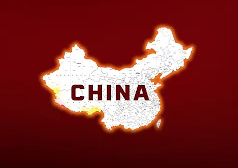
We are talking about Beijing’s new five-year plan. The term ‘AI’ appears 50 times in the document. Artificial intelligence is to be implemented across all sectors of the economy: the aim is to achieve 90% saturation in areas such as industry, social security, public administration and the military. Although China has a population of over 1 billion, it faces demographic challenges. These are to be addressed through the use of humanoid robots to support industry. Robot production is expected to double within five years and be deployed in companies affected by labour shortages.

Other key technologies are also mentioned:

– Quantum networks for Earth-space communication (ultra-secure information transmission system);

– Nuclear fusion;

– Communication between the brain and the computer;

– 6G.

In order to develop the above-mentioned sectors effectively, Beijing intends to increase R&D spending by an average of 7% per year. China anticipates GDP growth of around 5% per year, and the document also outlines plans to develop self-sufficiency, not only in technology but also, for example, by increasing grain production capacity.

When you read such a plan, you can see just how much China’s political philosophy differs from that of the West. Donald Trump says “Let’s make America great again” without setting out a long-term strategy. And European politicians and strategists are unable to present a unified plan that could make Europe great again. When one compares the West’s current political turmoil and war games with China’s methodical, long-term approach, it becomes clear who is best suited for the struggle for global hegemony.

Sources: Merics, GTAI


Cat turned mouse

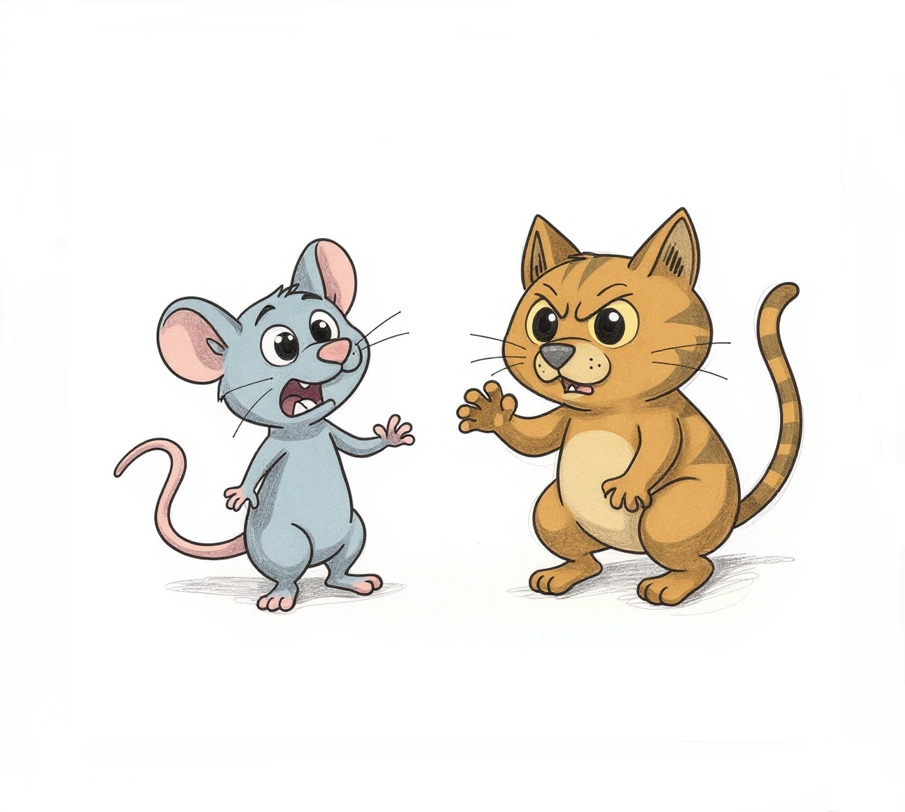
Three weeks into the war and it has emerged that the predatory cat – the United States (and Israel) – has turned into the mouse, while the mouse – Iran – has become the cat. What a turn of events! The United States has stepped into a quagmire and now has difficulties extricating itself from it. Is this the beginning of the end of the global superpower?

It was in 1979 that the Soviet Union deployed its troops to Afghanistan. The Western world condemned the action. The Soviets stayed in Afghanistan for a decade and then withdrew. They withdrew on the eve of the collapse of the first state of the workers and the peasants.

The same seems to be happening to the United States. Its troops have not put their boots on the ground as yet, but its air force and its missiles are operating against Iran, while Iran is striking back, and striking back successfully. Targets are hit not only in Israel but also in all the Persian Gulf countries that have American military bases. The leaders of those countries must have nurtured hopes of security once they had invited American soldiers on their soil, now they must regret it. It is also a signal to other countries having American bases: a warning to Poland, Romania, Germany, the United Kingdom, and Italy. Safe are they not.

In an attempt to save face, the American president has recently talked about negotiations with the Iranian leadership. The problem is that Iran denies ever taking part in any negotiations. President Donald Trump has issued a forty-eight-hour ultimatum, threatening that if the Strait of Hormuz was not made accessible to vessels from around the world, American troops would destroy Iranian power plants. The forty-eight hours did not elapse and the American president extended the period by a further five days. He is losing face. Worse, the American president is divorced from reality. And still worse, the American president has unleashed a war on purely ideological or religious grounds of ‘destroying the enemies of Israel, God’s chosen people.’ Wasn’t it the same in the case of the Soviet Union, whose military intervention in Afghanistan was dictated by the ideological urge to come to the aid of Afghan communists? Afghanistan did not threaten the Soviet Union at that time, nor is Iran a threat to the United States nowadays.

Tehran has become self-confident and daring. It is not waiting for the Americans and the Israelis to propose a ceasefire. Rather, Tehran has laid down conditions, and these are conditions of a victor:

[1] the US must withdraw from the region its military units,

[2] the US must unilaterally put an end to the hostilities,

[3] the US must pay Iran compensation for all the material damage and loss of human life. 

One might say, it is Tehran that has issued an ultimatum rather than the United States.

It is not merely that Iran seems to be gaining the upper hand: almost the whole world is on Iran’s side. Why? Because the whole world saw that the United States and Israel attacked Iran unprovoked, during the negotiations; because the whole world perceives the hostilities as a war of aggression on the part of the United States and Israel; because the whole world has had enough of American bullying, of American policing.

Iranians have surprised the world with the missiles that they have at their disposal. Some of them develop speeds of more than 10 Mach. Some of them have a reach of 4000 km (Iranians attempted to hit the American base on Diego Garcia Island on the Indian Ocean). Iran has decentralized its command centre; Iran has learnt to strike back asymmetrically. Iran is militarily supported by Hezbollah in Lebanon, Hamas in the Gaza Strip, and the Houthis in Yemen. Iran is also backed up by Russia and China, both of which supply it with satellite data.

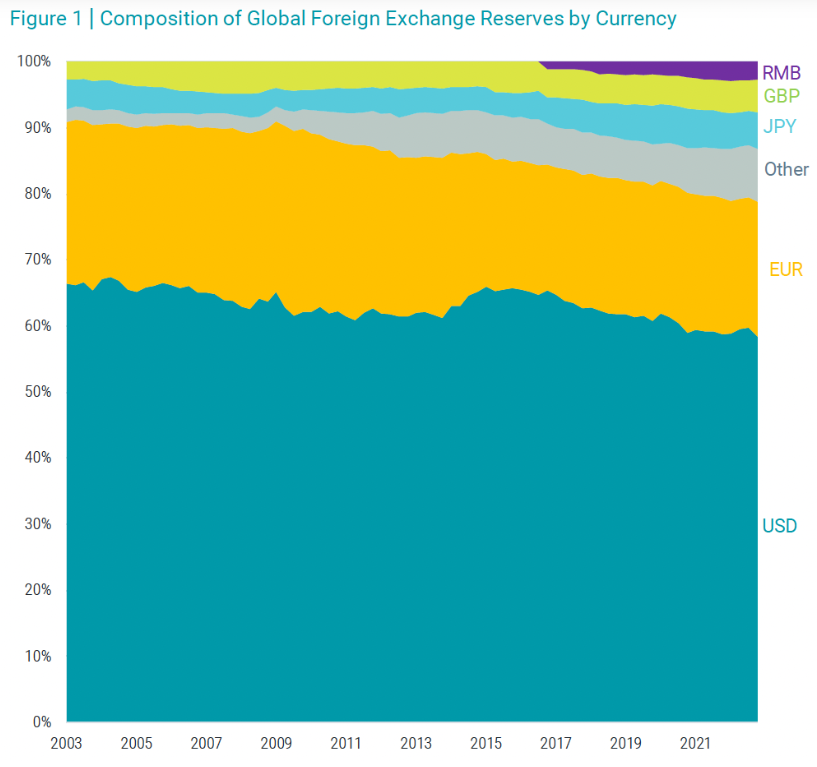
What if? What if the United States will be compelled to admit its defeat? Will it be another Vietnam or worse for America? The image of a superpower will have vanished in thin air. The Gulf states might as well demand that Washington withdraw its troops from their territory. Why should they have them on their soil? To further expose themselves to attacks? Iran – in league with China – might begin the sale of its oil and gas in return for the Chinese currency. That might lead to the end of the petrodollar. And if the dollar stops being in demand worldwide, the United States will spiral into a position of a country that will have difficulties solving its financial problems. Without the dollar as the international currency all American economic might will shrink. Till now, for decades nations would have bought dollars – i.e. sold goods and services – to stock them and to have currency for purchasing oil. Once this scheme comes to an end, America will cease to be flooded by foreign goods and services: America will be compelled to manufacture things on its own. Due to the outsourcing, there are not so many factories, engineers and skilled workers in the world’s most admired democracy. Rebuilding will take time…

The war against Iran was to be a walkover. The United States has already handled, in one way or another, Libya, Syria, Iraq, and Venezuela. Americans thought that Iran was to be yet another intervention of the same small calibre. How wrong they were!

When you drink alcohol, you feel good after the first couple of drams. Then slowly but surely the substance begins to impede your speech and motor activity. Eventually one of the drams becomes one too many. They say proverbially: one over the eighth. Was the attack on Iran – after Venezuela, Libya, Syria – one over the eighth?


gif loading

We are quoted by:

 
Menu
More